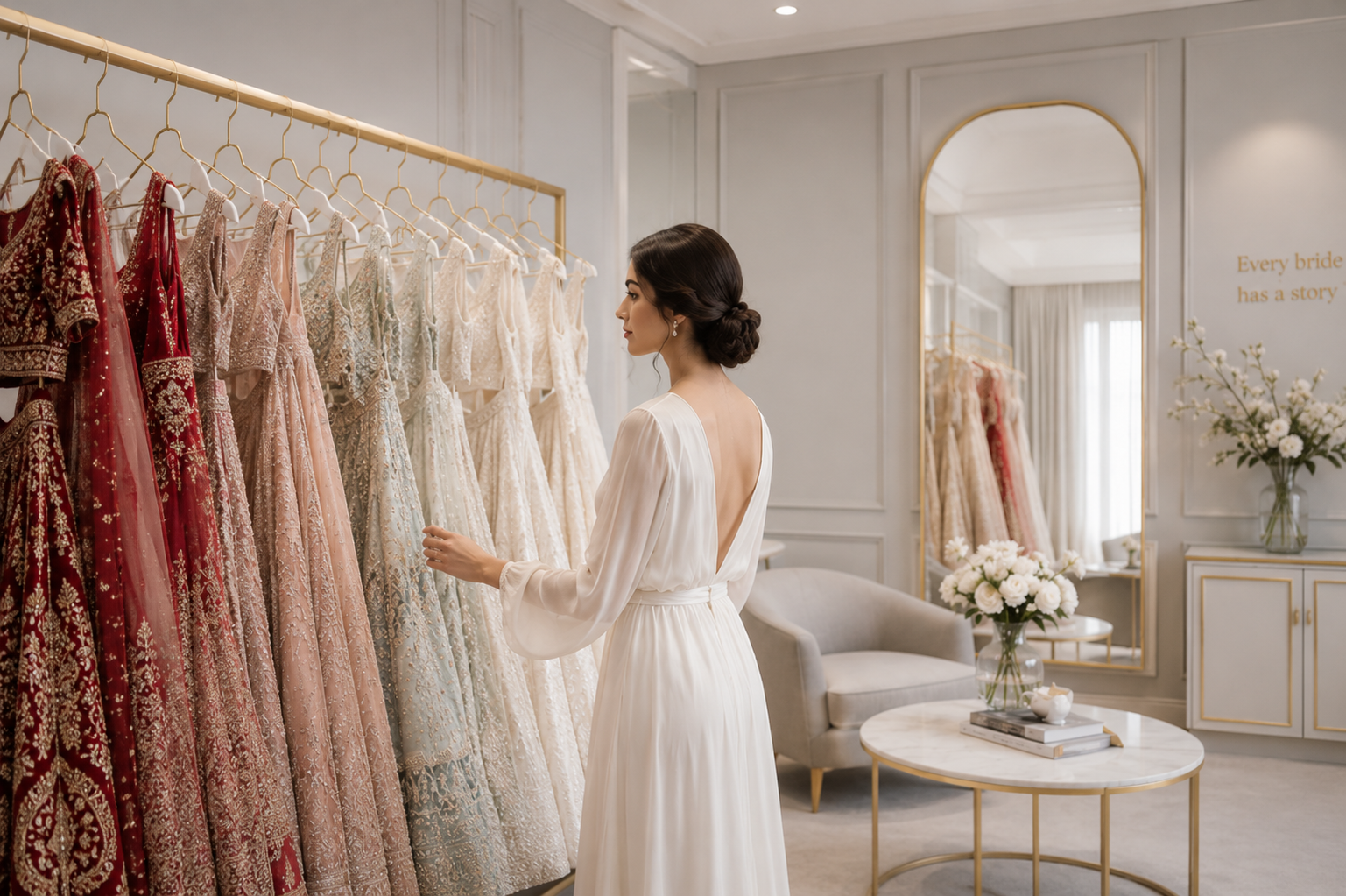
You've seen the reels. Rows of shimmering lehengas, shopkeepers pulling out "just one more piece," and a bride walking out with bags full of magic. Then you actually reach Chandni Chowk, and within twenty minutes you're standing in a crowded lane, sweating, holding a dupatta you didn't want, with a shopkeeper insisting this is "the last piece at this price."
If that fear is already sitting in your stomach, take a breath. You're not going to get lucky in Chandni Chowk. You're going to go prepared. And prepared brides come home with the right lehenga, at the right price, without the regret.
Let me walk you through exactly how to do that.
Why Chandni Chowk feels so overwhelming (and why that's actually good news)
Chandni Chowk isn't one market. It's a cluster of specialised lanes, each doing one thing extremely well.
The main road has your big lehenga showrooms. Kinari Bazaar is where laces, gota and trims live. Katra Neel is fabric country. Dariba Kalan handles jewellery and silver. Once you understand that the market is organised, the chaos starts to look like a map instead of a maze.
Here's the good news hidden inside all that noise: because everything is concentrated, you can compare ten versions of the same lehenga in a single afternoon. That kind of choice simply doesn't exist in a mall. The overwhelm you're feeling is actually your biggest bargaining advantage — if you know how to use it.
Before you even leave the house
The brides who overspend in Chandni Chowk almost always made their mistakes before they arrived. Get these three things right and you've already won half the battle.
Fix your budget in writing
Not a vague "around one lakh." A written breakdown. Lehenga, jewellery, footwear, dupatta, blouse stitching, alterations, and a 15% buffer for the things you'll forget.
Why in writing? Because in the moment, when a shopkeeper shows you something gorgeous that's "only" ten thousand over budget, a number in your head bends easily. A number on your phone doesn't.
Carry reference images, not just a vibe
Save 4–5 screenshots of the silhouette, colour family and embroidery style you love. Shopkeepers move much faster and stop upselling once they can see what you want. It also protects you from being talked into a trend that isn't you.
Dress for the battlefield
Wear something easy to try lehengas over — leggings and a fitted top work beautifully. Comfortable footwear you can slip on and off. Minimal jewellery. And carry cash, because many shops quietly add GST on card payments or simply give better prices for cash.
The right way to actually shop the market
This is where most brides go wrong — not in what they buy, but in how they move through the lanes.
Make your first visit a reconnaissance trip
I know this is hard to hear when you're excited, but your first day in Chandni Chowk should be for scouting, not buying.
Walk. Look. Take photos with the shop name visible. Note prices. Buy nothing.
Why? Because your eye needs to calibrate. The first lehenga always looks like the one. By your fifteenth, you'll finally understand what good embroidery, honest pricing and real fabric look like — and you'll buy from knowledge instead of adrenaline.
Use the three-shop rule
A quick, honest consultation in your timezone — and we map all this to your own wedding, together.
Book a consultation →Before committing to any major piece, see the same or similar item in at least three shops. The same lehenga design travels across the market, and the price can swing by thousands from one lane to the next. Three data points turn you from a guessing bride into a negotiating one.
Go early, go on a weekday
Shops typically open late morning — don't rush in at 10 a.m. to shuttered shutters. Aim for a weekday between late morning and early afternoon. Weekends and the festival rush mean crowds, distracted staff and firmer prices. A quiet shop with a relaxed owner is where the real deals happen.
Consultant tips you won't hear anywhere else
These are the things I tell brides privately — the small moves that quietly save the most money and stress.
Don't reveal you're the bride too soon
The moment a shopkeeper knows you are getting married, the emotional pricing begins. Sentences like "it's your special day, don't compromise" are a sales script. Browse first as if you're shopping for a cousin or a friend. Reveal it's your wedding later, if at all. You'll be amazed how much calmer the pricing stays.
Beware the friendly "guide"
If someone offers to walk you to "the best shop," politely decline. Many of these touts earn a cut, and that cut is silently added to your bill. The friendliest face in the lane is not always working for you.
Buy extra blouse and dupatta fabric
Always buy a little more fabric than you think you need — for a spare blouse, a backup in case of alteration errors, or a matching accessory later. Matching a shade months down the line is nearly impossible, and this tiny expense saves a large headache.
Photograph everything, tag everything
Every piece you shortlist, photograph it with the shop's name or card in the frame. By evening you'll have twenty near-identical lehengas in your gallery and no memory of which was where. This one habit prevents the exhausting "wait, which shop was that?" spiral.
Feel the weight before you fall in love
Try the lehenga on and stand in it for a few minutes. Heavy embroidery looks stunning on a hanger and becomes unbearable after three hours of an eight-hour wedding. Comfort is not a compromise — it's the difference between glowing in your photos and gritting your teeth through them.
Common mistakes to avoid
Even smart brides fall into these. Read them twice.
Buying on the very first visit. Emotion is highest and knowledge is lowest on day one. It's the worst possible moment to commit.
Forgetting stitching and alteration time. Blouse stitching, falls, can-can and fittings take weeks — and Chandni Chowk tailors get swamped in wedding season. Shop at least 4–5 months before, never in the final panic weeks.
Blowing the budget on the lehenga. Brides routinely spend everything on the outfit, then scramble for jewellery, footwear and the dupatta. Protect money for the full look, not just the star piece.
Over-matching everything. A lehenga, jewellery, bag and shoes all in the exact same shade looks costume-like, not couture. Coordinate; don't clone.
Assuming you can return it. Most bridal shops offer no returns or exchanges. Treat every purchase as final and inspect embroidery, seams and staining before you pay.
Bringing an army of opinions. One trusted person whose taste you share. Not five. Conflicting voices lead to a lehenga that pleases everyone except the bride wearing it.
Your quick Chandni Chowk checklist
- Written budget with a 15% buffer
- 4–5 reference images saved on your phone
- Comfortable clothes, easy footwear, minimal jewellery
- Enough cash for better pricing
- Reconnaissance visit done — no buying on day one
- Three-shop comparison before any big purchase
- Extra blouse and dupatta fabric bought
- Every shortlist photographed with the shop name
- Weight and comfort tested, not just the look
- Stitching and alteration timeline confirmed
The one thing to remember
Chandni Chowk rewards the calm, prepared bride and quietly overcharges the anxious one. The market hasn't changed in decades — but how you walk into it changes everything.
Go in with a plan, a budget and a little patience, and you won't just find a beautiful lehenga. You'll find it at a price that lets you sleep well the night after.
Imagine walking the lanes with a plan built around your budget, body and wedding. In a personalised bridal shopping consultation, we map your whole strategy — where to go, what to pay, what to skip, and how to dodge the costly mistakes most first-time brides learn the hard way.
Book a consultation